
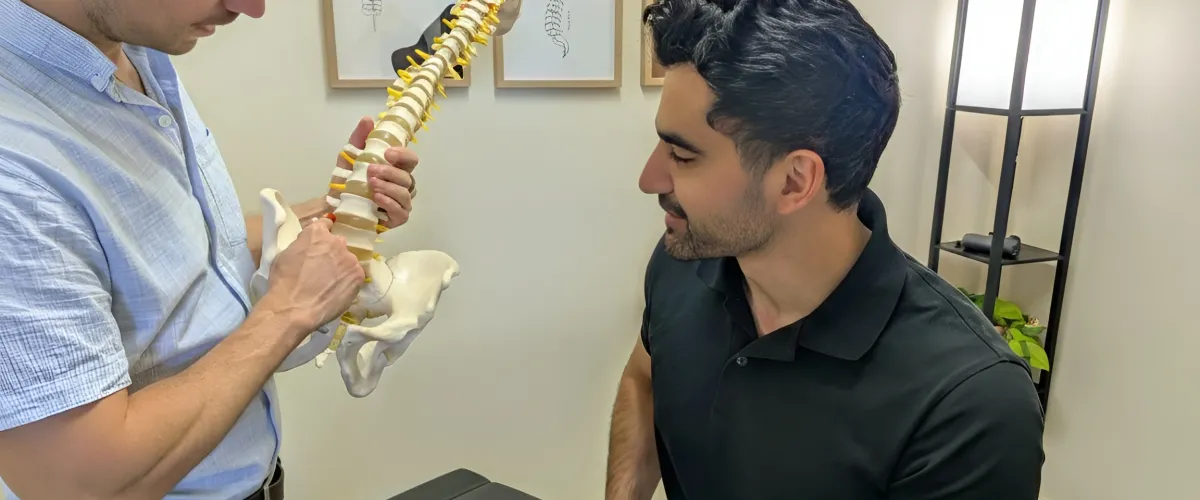
Why rehabilitation matters
Manual therapy (adjustments, soft tissue work, dry needling) can reduce pain and restore movement in the short term. But for most musculoskeletal conditions, passive treatment alone is not enough. Without addressing the underlying capacity deficit (weakness, poor movement control, deconditioned tissue), the same problem tends to recur.
Rehabilitation targets the "why" behind the symptom, building the physical resilience that makes recurrence less likely. It's the part of care that creates lasting outcomes rather than temporary relief.
What rehabilitation involves
Rehabilitation at Bassendean Chiropractic is evidence-informed and individualised, meaning it's based on your specific assessment findings, not a generic handout. Programmes are built around:
- Movement assessment: identifying faulty movement patterns, muscle imbalances, and control deficits contributing to your condition
- Load management: progressively increasing tissue load in a way that stimulates adaptation without aggravating symptoms
- Motor control: retraining how your body moves, particularly in the lumbar spine, hip, and shoulder girdle
- Strength: building the muscle capacity needed to support joints under load, especially important for returning to sport or physical work
- Functional progression: bridging from pain-free movement to the specific activities that matter to you
Rehabilitation Prescription
Exercise programmes are delivered in clinic and via PDF, so you always have access to your programme, exercise demonstrations, and session notes. This removes the reliance on paper handouts and makes it easier to stay consistent between appointments.
Your programme will be updated as you progress. If an exercise isn't working or you've exceeded it, the programme can be adjusted in real time.
Who benefits most from rehabilitation
Rehabilitation is appropriate for a wide range of presentations. It's particularly valuable for:
- Recurring back or neck pain that keeps coming back after treatment
- Disc-related conditions where long-term spinal loading habits need to change
- Post-injury recovery: returning to sport, manual work, or training
- Desk workers with chronic postural dysfunction and related pain
- Seniors looking to maintain mobility and reduce fall risk
- Anyone who wants to understand and manage their condition independently
The goal: making you less reliant on treatment
The measure of good rehabilitation is that you need less of it over time, not more. The aim is to equip you with the understanding and physical capacity to manage your own body: to know what to do when symptoms flare, how to train around injuries, and how to maintain what you've built.
That might sound like a strange thing for a clinic to prioritise. But a patient who understands their body and knows how to manage it is a better outcome than one who depends on regular passive treatment indefinitely.