
What brings seniors to Bassendean Chiropractic
- Lumbar spinal stenosis: narrowing of the spinal canal causing leg pain, heaviness, or cramping with walking
- Age-related disc degeneration and lumbar stiffness
- Chronic lower back pain that hasn't responded to other approaches
- Reduced hip and thoracic mobility affecting posture and gait
- Nerve-related leg symptoms including sciatica in older adults
- Post-surgical rehabilitation and maintenance care
Non-surgical spinal decompression for stenosis
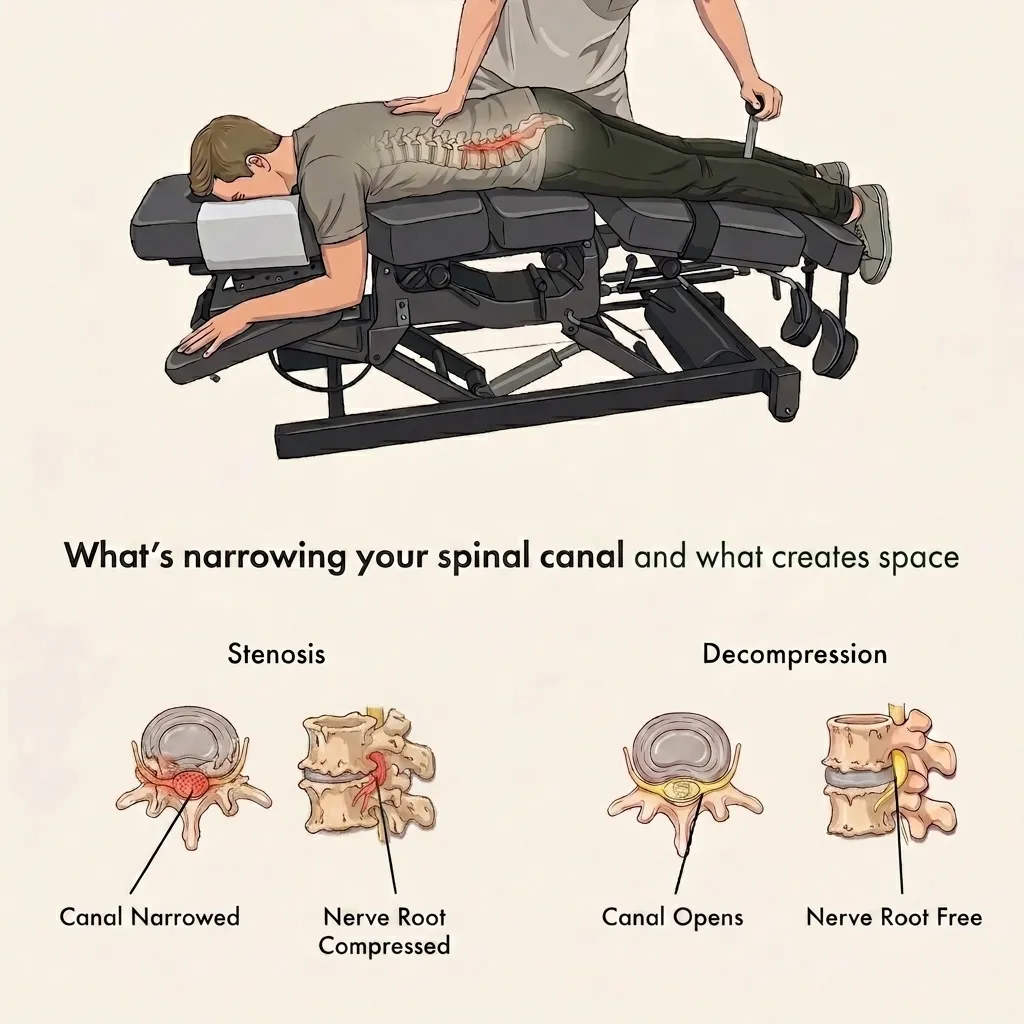
Lumbar spinal stenosis, narrowing of the spinal canal that compresses the nerve roots, is one of the most common causes of leg pain, heaviness, and cramping in older adults. It's often described as pain or fatigue in the legs that comes on with walking and eases with sitting or leaning forward.
The Flexion Distraction table offers a gentle, non-surgical decompression approach specifically suited to this presentation. The technique creates a slow, rhythmic traction force through the lumbar spine, widening the spinal canal, reducing nerve root compression, and improving segmental mobility without any forceful manipulation.
Bassendean Chiropractic has a Flexion Distraction table on site. For seniors managing stenosis or disc-related leg symptoms, this is often the most appropriate and comfortable treatment option available outside of surgical intervention.
Low-force technique options
Not all chiropractic care involves manipulation. At Bassendean Chiropractic, several low-force approaches are available that suit older presentations particularly well:
- Flexion Distraction: table-assisted lumbar decompression, entirely passive and comfortable
- SOT (Sacro-Occipital Technique): uses wedge-shaped blocks rather than manipulation, suited to sensitive presentations
- Soft tissue therapy: gentle muscle and fascia work to reduce tension and improve movement
- Rehabilitation: gentle, progressive movement programmes delivered via patient app
What to expect
The initial consultation runs 45 minutes. We take a thorough history including any previous imaging, surgical history, and current medications, all of which inform which techniques are appropriate. Treatment is always discussed and explained before it's applied, and technique choices are made conservatively.
Supporting independence long term
The goal isn't to create an ongoing dependency on treatment. It's to help you maintain the mobility and function that supports your independence, with a clear plan, realistic expectations, and practical things you can do yourself between visits.