
Neck pain doesn't have one cause
People arrive with neck pain from all sorts of starting points: waking up unable to turn their head, hours bent over a screen, physical or repetitive work, sport or an old whiplash injury, or stress that quietly settles into the shoulders and neck. The trigger varies, but the underlying problem is often the same: restricted joint movement and muscle strain through the neck and upper back. That's why a one-size-fits-all fix rarely works, and why assessment matters more than guessing at the cause.
Why stretching alone isn't enough
Stretching can bring temporary relief by easing muscle tension. But it doesn't address the joint restriction, movement pattern, or daily habit creating that tension in the first place. Without addressing those underlying factors, the tightness usually returns, often within hours or days. Lasting change comes from identifying what's actually driving the problem, not just easing the symptom.
The neck-headache connection
Headaches that originate from the neck, cervicogenic headaches, are one of the most commonly misidentified headache types. They're caused by referred pain from the upper cervical joints (C1, C2, C3) and are often mistaken for tension headaches or migraines. If your headaches consistently start at the base of the skull or come with neck stiffness, the neck is likely involved, regardless of what brought the neck pain on in the first place.
How we assess neck pain
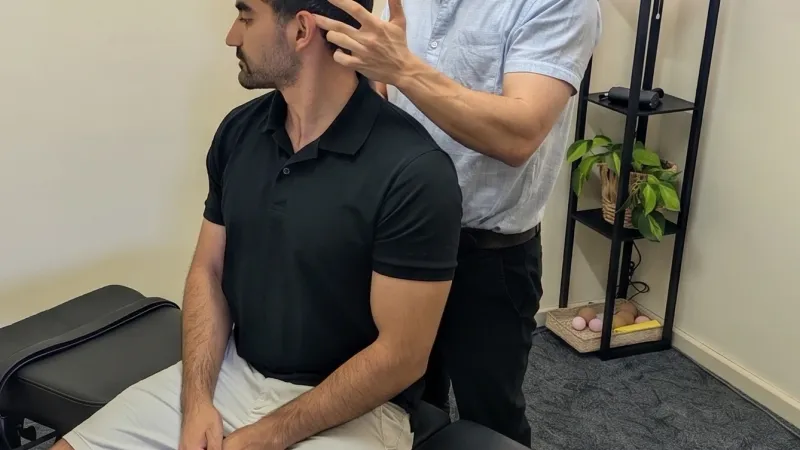
Assessment covers the full cervical and upper thoracic spine: joint mobility testing, postural analysis, upper limb neurological screening where indicated, and a detailed history of aggravating factors. We're identifying the specific joints and structures involved, not treating the neck generically.
How we manage it
Manual therapy to restore restricted cervical joint movement, soft tissue therapy for the surrounding musculature, dry needling for trigger point-driven tension, and a targeted rehabilitation plan delivered via our patient app for between-visit work. For patients who prefer a low-force approach, SOT technique is available.